
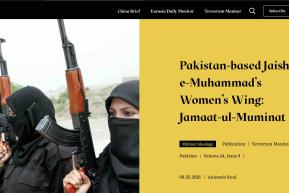
Pakistan-based Jaish-e-Muhammad’s Women’s Wing: Jamaat-ul-Muminat
On October 8, 2025, Maulana Masood Azhar—leader of Jaish-e-Mohammed (JeM) in Pakistan and a UN-designated terrorist—announced the creation of a women’s wing called Jamaat-ul-Muminat (JuM), or “Organization of Female Believers.” The announcement was made from the group’s headquarters at Masjid Usman-o-Ali in Bahawalpur, Pakistan.

Odisha’s Shift from Safe Haven to Emerging Node in India’s Extremist Network
At least two incidents in 2026, including an explosion in Bhubaneswar’s Sundarapada locality that killed two people and the arrest of Sheik Imran from the same city for conspiring to wage war against India in a separate incident, highlight more than isolated security breaches.

From Networks to Nodes: The Evolving Architecture of Islamist Extremism in India
The trajectory of jihadist activity in India is shifting. High-impact attacks, such as the April 22, 2025, Pahalgam assault in Jammu and Kashmir attributed to Lashkar-e-Taiba/The Resistance Front, and the November 2025 suicide bombing near Delhi’s Red Fort linked to a Jaish-e-Mohammed (JeM) affiliated “Doctors network”, still mark the threat landscape. However, early 2026 indicates a change in direction. The pattern is moving from episodic, high-visibility violence to sustained, low-level radicalization within digital and local networks.

MLM: Javed Meetoo: Most Active Jihadist Ideologue in Mauritius
Mauritius, an African island nation known for its multiethnic and multicultural society, is increasingly grappling with Islamist extremism. Islamist preacher and activist Javed Meetoo—also known by his Arabic nom de guerre, Abu Junaya—is central to this dynamic. His rhetoric and activities demonstrate how transnational jihadist ideas can become influential even in historically peaceful and diverse countries, such as Mauritius.

Özgür Altun: Turkish Media Mastermind for ISKP Arrested in Pakistan
Ozgur Altun (Abu Yasir al-Turki), a key operative of the Islamic State Khurasan Province (hereafter, IS-Khurasan), was apprehended on June 1, 2025, at an undisclosed location in Balochistan, near the Pakistan-Afghanistan border.

Militant Violence in Jammu and Kashmir Post-Abrogation of Article 370
Abstract: This article presents a chronological and thematic analysis of militant violence in Jammu and Kashmir from the abrogation of Article 370 of the Indian Constitution in August 2019 to July 2025.
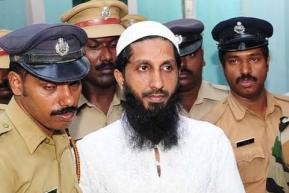
MLM: Thadiyantavide Nazeer: Lashkar-e-Taiba-Linked Ideologue Recruiting in India From Prison
Thadiyantavide Nazeer is a key Islamic extremist associated with the Lashkar-e-Taiba (LeT) in Pakistan and India’s homegrown jihadist group, Indian Mujahedeen (IM). He is currently serving a life sentence in the Bengaluru Central Prison. Nazeer’s checkered journey into the world of crime and terrorism spans over two decades, marked by vandalism, bombings, trials, and acquittals. His life story demonstrates the intersection between terrorist recruitment and prison radicalization in India. Background and Key Operations
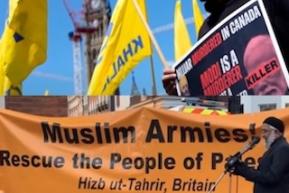
Weaponising victimhood: How Khalistanis, Islamists exploit the liberal West
In mid-June 2025, ‘Pro-Khalistan’ group Sikhs for Justice supporters packed Calgary’s City Hall square, waving Khalistan flags and chanting “Kill Modi politics” while demanding that India be “Balkanised” as Prime Minister Narendra Modi attended the G7 summit nearby (Global News, Canada, June 16).

TM: Rising Islamist and Anti-Hindu Sentiment in Bangladesh in Wake of Pahalgam Attack
Bangladesh’s political and religious landscape has witnessed a sharp sectarian turn since the ouster of former Prime Minister Sheikh Hasina and her flight to India in August 2024. What began as protests over job quota reforms soon escalated into a broader civil uprising. Exploiting the ensuing power vacuum, factions that include Islamist groups have expanded their influence, propagating anti-Hindu sentiment nationwide.