
Commentaries
COP31 and the Limits of Consensus in Climate Diplomacy

November 26, 2026
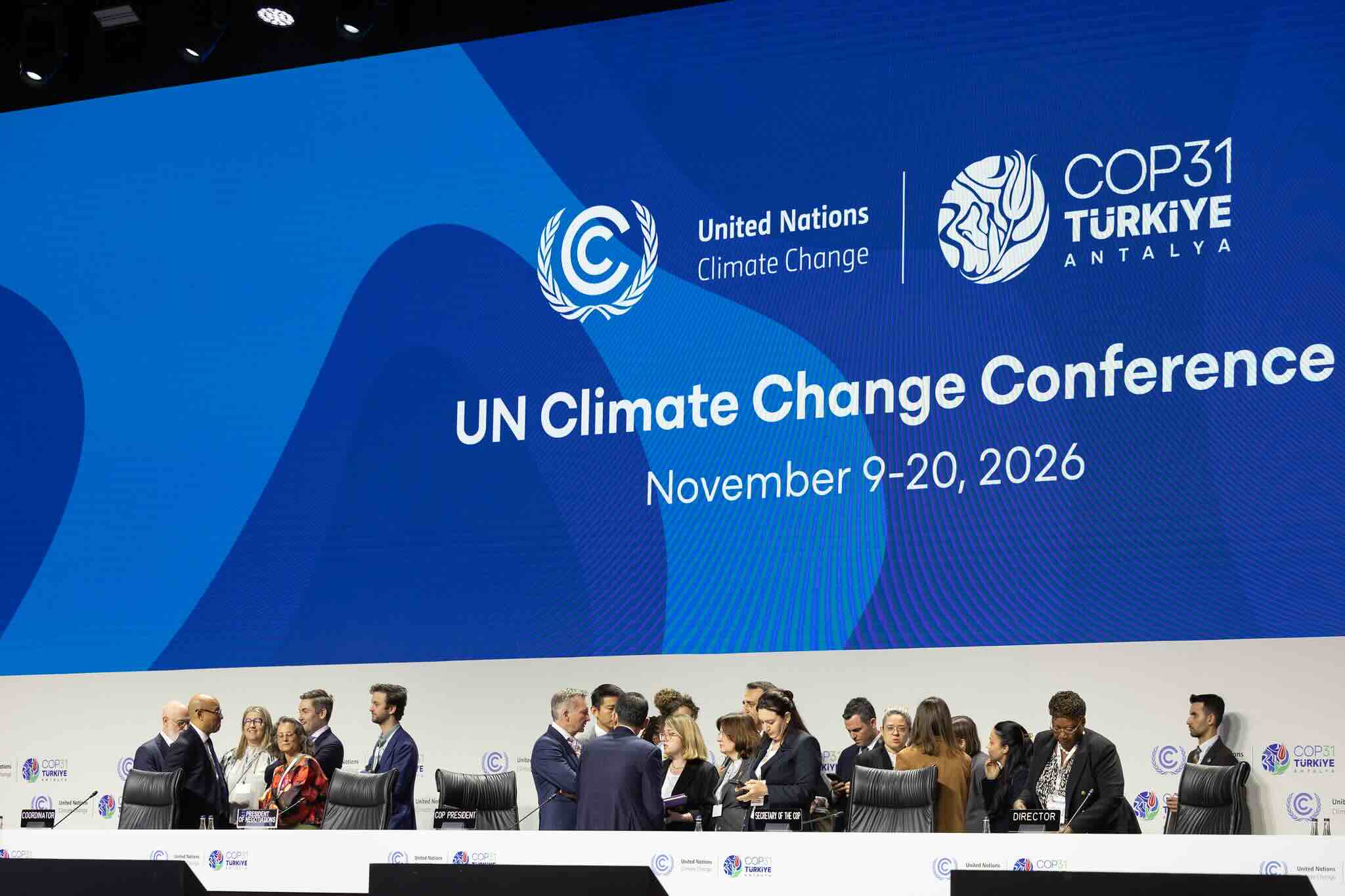 Although the 31st Conference of the Parties (COP 31) to the UN Framework Convention on Climate Change (UNFCCC) became the longest-running climate negotiation, it failed to adopt a COP declaration—the proposed Antalya Pact. For many climate observers, COP 31, like several earlier COPs, was disappointing in its efforts to build consensus on reducing fossil fuel use, securing climate finance commitments, and advancing global climate action. Has geopolitics overshadowed the climate summit, or are countries' traditional national interests taking precedence over the less familiar, non-traditional threat of climate change? Moreover, is the COP process, the only available means of addressing global climate crises, losing its functionality and credibility?
From the outset, expectations for COP 31 under the ‘experimental’ dual presidencies of Türkiye and Australia were very low. Yet the absence of the US for the second time in a row, and back-to-back meetings of formidable economic blocs elsewhere—Asia-Pacific Economic Cooperation (APEC) in Shenzhen, China, on November 18-19 and the 49th ASEAN summit in Manila, Philippines, on November 15-17—have made COP 31 a miss in the annals of climate negotiations. With competing priorities further weakening the direction of the transition away from fossil fuels, the G3—China, the US, and Russia—agreed during APEC to boost the production and supply of petroleum products for the benefit of all nations.
Surprisingly, the very greenhouse gases (GHG), largely from fossil fuels producing CO2, that brought countries together at the 1992 Earth Summit to tackle climate change have created a deep rift over the very mention of fossil fuels among member countries at COP 31, held from November 9-20 (extended by two days), in Antalya, Türkiye. The ultimate objective of the UNFCCC, as enshrined in its Article 2, is to stabilise GHG concentrations ‘at a level that would prevent dangerous anthropogenic interference with the climate system.’ After 28 years, the member countries agreed at COP 28 in Dubai to transition away from fossil fuels. While an initial COP 31 draft mentioned fossil fuels six times, oil-producing countries strongly opposed it. Consequently, the final text deleted any mention of fossil fuels under pressure from oil-producing countries and their cohorts, a move unacceptable to the European Union (EU), Least Developed Countries (LDCs), several small island states and vulnerable countries. In fact, fossil fuels are mentioned four times in the Convention text itself.
Climate COPs are rapidly losing their credibility, utility, and significance amid the tension between geopolitical rivalry and the unambiguous science of climate change.
Negotiations during COP 31 were no exception, with significant divisions among member countries, including fissures within negotiating blocs. Climate talks, which involve balancing complex issues such as national interests, developmental priorities, climate justice, just transition, and historical responsibility, are inherently complex and dynamic. However, progress has been made on several key COP agendas, such as the just transition work program for the next three years, the climate finance work program, and a significant boost to electrification by 2035.
Is it time to reform the COP process? The core principle of consensus guides the COP process. However, as climate commentators have argued, this unanimity requirement has become a stumbling block to progress in addressing the climate emergency. Former US Vice President and Nobel Laureate Al Gore stated that the COP process needed significant reform. Since the Baku Summit (COP 29) in 2024, calls to overhaul the UNFCCC's decision-making process have grown louder after each COP. Consequently, the UNFCCC's Executive Secretary, Simon Stiell, conceded that he would seek advice on potential reform in due course, most likely at COP 32 in Ethiopia in 2027. Despite India’s concerns and reservations about inadequacies in historical responsibility, equity, and climate finance reflected in the final text, India, on behalf of like-minded developing countries (LMDCs), reaffirms its commitment to multilateralism and the principle of consensus.
Meanwhile, interest among members is also growing in supporting agreements made outside the COP process, such as the 2026 Santa Marta Process. Built on the COP 28 commitment to transition away from fossil fuels and energised by COP 30, the Santa Marta Process, co-hosted by the Netherlands and Colombia, aimed to bypass the consensus norm in formal UNFCCC negotiations. From scientific advisory committees to legal manoeuvres, including an advisory opinion from the International Court of Justice (ICJ) on climate change, there is a growing demand for plurilateral processes to tackle climate emergencies. In contrast, many member countries, criticised for their obstructionist role, are sticking with multilateralism in the COP process, which gives them room to manoeuvre by delaying any binding commitments that would restrict national development.
Meanwhile, many poorer countries objected to the lack of clear financial commitments from developed countries to help them adapt to worsening climate emergencies. Ironically, despite $1.2 billion USD targeted for 2026-2029, the Adaptation Fund received only $50 million USD in pledges at COP 31. At COP 30, it was agreed to triple adaptation finance by 2035. Now, there are no concrete figures or baseline against which to measure developed countries' financial pledges. India intervened by submitting strong reservations against the language on financial commitments from developed countries. For most vulnerable countries, progress on finance is far from reality.
The world may not get a good deal at every COP, but each COP must provide progressive pathways to tackle climate breakdown. The fact remains that failure to reach an agreement at COP is a major missed opportunity at a time when urgent collective action is needed. Therefore, future climate talks must navigate between geopolitical constraints and the unambiguous science of climate change. Reforming COP requires consensus from all members; however, if consensus is lacking, a two-thirds majority of members present and voting at a specific COP can approve amendments as a last resort. We must understand that blaming the COP process alone, which brought us all here, is not the answer. What we are missing is world leaders who can stitch together members' interests by guiding the climate pledges into implementation. All hope rests with COP 32 in Ethiopia, Africa- the most vulnerable continent- to build confidence, coordination, and cooperation among members and in the COP process itself.
Dr Avilash Roul (PhD) is a Senior Fellow at the Society for the Study of Peace and Conflict, New Delhi.
Read an abridged version of this commentary at Orissa Post, November 26, 2026.
Image Credit: COP31 Closing/ Final moments of COP31 (Photo: © UN Climate Change - Kiara Worth), https://www.flickr.com/photos/unfccc/55665884754/in/photostream/