
Commentaries
Lana Nusseibeh Could Help Usher the United Nations into a New Era
November 14, 2026
The selection process for the 10th United Nations Secretary-General to succeed António Guterres, whose second five-year term ends on December 31, 2026, is underway, governed by Article 97 of the UN Charter and General Assembly resolution 79/327. The 2026 selection will likely be the most consequential for two reasons. First, the UN has stated that more than 60 conflicts are ongoing, the highest number since the Second World War. It is therefore urgent for the UN to focus on its peace and security pillar, which is equally interlinked with its development and human rights pillars, as people's lives are paramount. The next SG will need to address conflicts worldwide as a priority.
Second, while the UN80 initiative is underway, additional reforms are expected, including a state-driven process for UN Security Council reform, changes to international financial institutions, and other measures, aligned with global responsibilities and states' respective capabilities. If a multipolar order is indeed emerging, the new powers will need to propose and help build consensus on concrete solutions to reform the UN system, shifting from critical statements to action, under the next SG.
This is a historic selection process as several states are keen to see a woman lead the UN. Out of 11 candidates, seven are women. Currently, three candidates have withdrawn. Based on the UN’s informal regional rotation system, the next SG should ideally hail from the Latin America and Caribbean region. While there are several experienced candidates such as Rebeca Grynspan, Rafael Grossi and Carolyn Rodrigues Birkett, they have all faced numerous rounds of straw polls, leading in the races but not securing the majority needed. After several rounds, new candidates have entered the race. While all the candidates have demonstrated their ability to lead the UN, given the crisis in West Asia and the conflict impacting her country, one candidate who could lead the UN into a new era is Lana Zaki Nusseibeh, Minister of State in the UAE Ministry of Foreign Affairs (on leave).
Nusseibeh served as the UAE's Permanent Representative to the UN from 2013 to 2024 and served on the UN Security Council in 2022-2023. Under her leadership, the Security Council advanced several UAE-led resolutions. One key resolution laid the groundwork for establishing a UN mechanism to accelerate the flow of humanitarian aid to the Gaza Strip, at a time when the UN faced several hurdles in bringing aid to civilians in Gaza. For her work on Palestine, the Minister was awarded the Shield of Palestine by the State of Palestine. She has also served as the UAE’s Co-Special Envoy on Afghanistan and Pakistan.
In addition, her academic credentials include degrees in History and Israeli and Jewish Diaspora studies from Cambridge and the University of London. Coupled with her professional and academic experience, and as outlined in her vision, Nusseibeh will pursue compromise and quiet diplomacy, advancing gradual steps such as local truces and prisoner exchanges toward lasting peace. As SG, Nusseibeh has vowed to pursue this relentlessly, even if it fails. As a concrete step, Nusseibeh would launch a Mediation Board that works in parallel with the SG’s office to take political risks for peace. One can infer that she would focus on supporting states to make deals to resolve conflicts. To advance peace and security, states should empower the next SG to play an active role in mediation, rather than embroil her in geopolitics.
On human rights, Nusseibeh pledges to defend international law, the UN Charter, and the Universal Declaration of Human Rights, and aims to fund the UN’s human rights work at a level that matches the organization’s mandate. Addressing the human rights violations and the alleged role of the UAE in the Sudan conflict, Nusseibeh recently indicated that stopping the conflict would be a litmus test for success for the next SG, adding that the atrocities committed by the Rapid Support Forces were atrocious and that she would support all UN fact-finding missions for accountability and transitional justice, engage in dialogue, scale up humanitarian efforts, and have a political process that allows the realization of the democratic aspirations of the people.
On development, her vision is critical as it outlines priorities such as focusing UN developmental cooperation on nationally determined priorities; putting employment at the center of development; and addressing debt distress with practical proposals. Nusseibeh also aims to negotiate a successor to the Sustainable Development Goals.
On climate change, Nusseibeh’s experience working with IRENA and MASDAR could bring a “just transition” approach to advance sustainable economies, as the final document under the UAE’s COP28 presidency called on countries to transition away from fossil fuels in energy systems for the first time.
Another key area is UN reform. Given her experience co-chairing the negotiations on Security Council reform; as President of the UN Women Executive Board; and Co-Facilitator of a working group to revitalize the General Assembly; alongside chairing a group of states that discusses fresh ideas to reform the UN, she is qualified to preside over the UN80 reform process, as well as nudge states to bring into action their proposals. In addition, she has indicated that states will be more willing to invest in an organization that can show what their contributions have achieved. She proposes requiring the UN to report results against costs, identify duplication across the system, and be direct with Governments about outstanding payments.
While she has ranked fourth in the straw polls twice, the UAE maintains positive and constructive relations with all the veto-wielding powers. The UAE could use its excellent diplomatic leverage to convince the powers that Nusseibeh is the right person to lead the UN. Given that the UAE is an Abraham Accords signatory, the Government could alleviate U.S. political concerns regarding Israel as well.
Her candidacy should excite the world because of her experience at the UN, knowledge of the UN system and reform process, her commitment to independence, and a vision that articulates her priorities with a strong focus on peace and security, therefore potentially serving as the most consequential SG in decades to lead it into a new era. India should endorse her candidacy and work with the UAE and other powers to support nominating a close strategic partner. If she is selected, Lana Nusseibeh would be the first woman to lead the UN as Secretary-General.
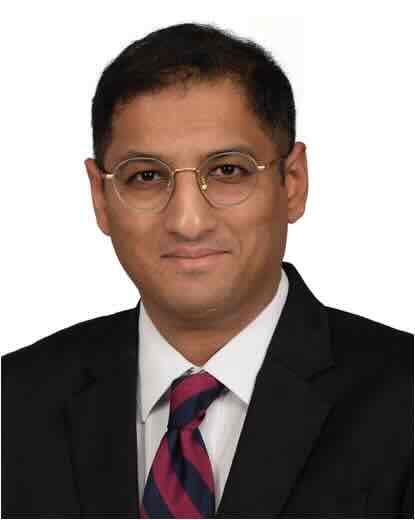
Author: Arjun K. Bhargava is a sustainability and international affairs consultant.
Image: L-R: 1-Ivonne A-Baki, 2-Lana Zaki Nusseibeh, 3- María Fernanda Espinosa Garcés, 4-Carolyn Rodrigues Birkett, 5- Rebeca Grynspan Mayufis. (The UN Process 2025-2026)