
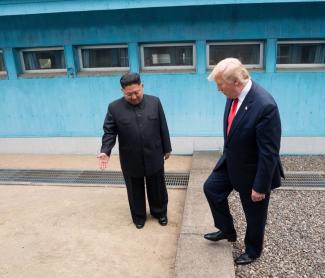
Twitter Diplomacy: Trump-Kim meeting at DMZ
In a surprise turn in world diplomacy, US President Donald Trump managed to pull a successful meeting with North Korea’s Chairman Kim Jong Un within a short notice of just 24 hours. Actually, Trump was to be on an official visit only to South Korea. This visit was planned in such a fashion that immediately after finishing the G20 summit in Osaka, Japan, he would travel to South Korea (29 & 30 Jun 2019). During this time, Trump was scheduled to visit the line dividing North and South Korean territory in the Demilitarized Zone (DMZ).
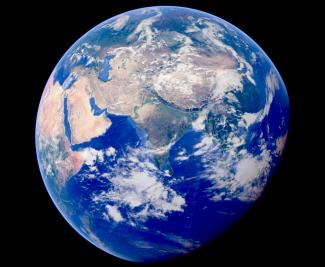
What should be Outer Space Agenda for Modi 2.0?
India’s story of growth is directly related to the development of technology. If Modi 2.0 is keen to find long-term solutions to ensure growth, then it has no option than to make investments in technologies. One important area of technology where much is expected from Mr Modi is the outer space. He has raised much expectation since his first term as he took a keen interest in the activities of Indian Space Research Organisation (ISRO).
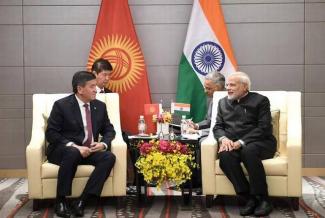
‘Stans’ in India’s Foreign Policy Basket
Despite a strained relationship with the neighboring ‘Stan’ (Persian for "land, place or "country") i.e. Pakistan for the last few years, India has been gradually bringing other ‘Stans’ into its foreign policy fold. Kosh Kelingiz ! (Welcome!).
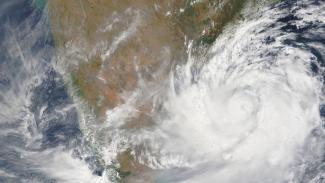
Cyclone Fani: Act of God in Anthropocene?
Natural disasters such as cyclones, their frequency and pace, must be directly linked to climate change.
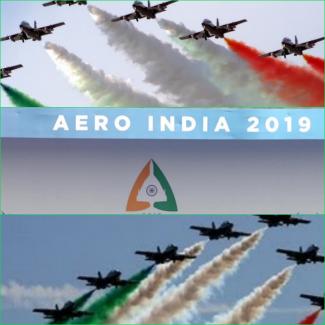
Indian Aerospace Industrial Might: Excellence or Muddle Through?
Indian aerospace industrial capabilities have thus far been dominated by a giant conglomerate – Hindustan Aeronautics Limited (HAL) – that have evolved through decades. HAL’s predecessor Walchand Hirachand Industries Limited was a privately owned aircraft manufacturing entity engaged primarily in repair and overhauling of British and Allied air assets, before being taken over by the government in the 1940s.
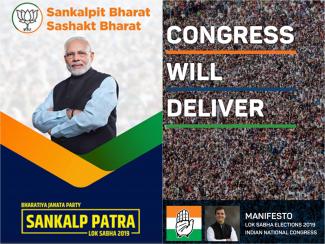
‘Urban and Peri-Urban Sustainability’ Agenda in Election Manifestos
Environment has never been a popular subject for India’s major political parties during general elections. Even in the post-1972 UN Conference on Human and Environment period or post-1992 Earth Summit scenario when environment emerged as a strong international and national issue, seldom has environment found an appropriate space in party manifestos in India. At the outset, environment as an issue in the election campaign is still considered a matter of concern for upper strata of societies only.
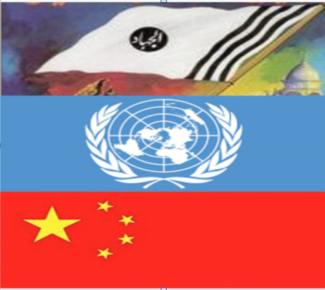
Why China refuses to label JeM’s Masood Azhar as a global terrorist
China's latest position on Masood Azhar, the dreaded terrorist leader who heads Pakistan based Jaish-e- Muhammad (JeM) has angered Indians, to say the least.
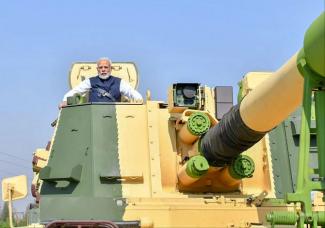
Politicization of the Military and 2019 General Elections
Three primary reasons propel this unease calm: a) cross-border firing or shelling along the border with search and combings by the Indian security forces within J&K continue, which can lead to unpleasant situation, if ill-managed by either state; b) although planned strikes – air, land or naval – from either side seem to have taken a break (it may be noted that both sides appear to have their main and contingency plans ready and are in high alert), another misadventure from non-state terror groups cannot be ruled out leading to bigger employment of military assets and resources fo
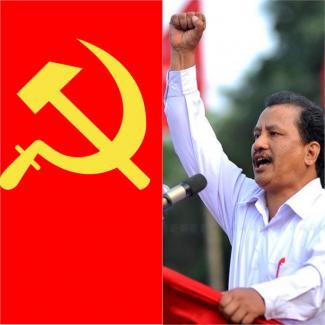
Maoism Revisited: A Brief Sketch of Communist Party of Nepal
In response to a series of bomb blasts and kidnapping of a member of legislative assembly in Bajhang district recently, the Nepal government on March 12, 2019, proscribed the Netra Bikram Chand-led Communist Party of Nepal (CPN) by branding the same as a criminal group. The ban was imposed just 16 days before the second investment summit, scheduled for March 29-30 by sending a message to the domestic and external investors that Nepal is safe for investment.