
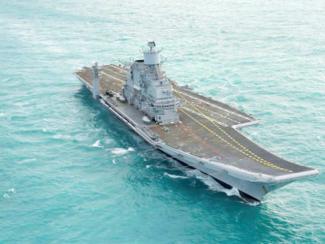
Indian Navy: Developing ‘Arctic Sea Legs’
Two Russian built warships with the same name i.e. Admiral Gorshkov have been making news in the last few weeks. The first vessel is an aircraft carrier which was sold to India in 2004 and is rechristened as INS Vikramaditya. It has been plagued in controversy due to costs and time overruns. The pre-delivery trials of the ship were unsuccessful and according to reports, the vessel will have to wait till the White Sea ice melts during the summer of 2013 to complete the trials.
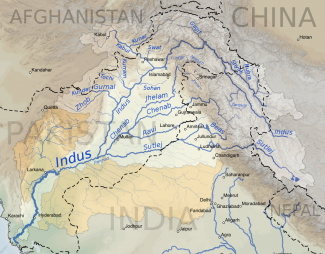
Dehydrating Indus: India and Pakistan Need to Set Future Agenda
Thinking about a majestic river like the Indus River in South Asia attracts more perspective and situation room strategies than a possible benefit-sharing solution. From countless war strategies to suing each other in legal battles, from instigating to investigation, from hydro-phobia to hydro-politics, from misinformation to deliberately uninformed, India and Pakistan have been engaged in myriad exchanges and wasting time and opportunity. The exception could have been only during the ancient Indus Civilisation when settlements on both sides of the river respected the Indus as one.
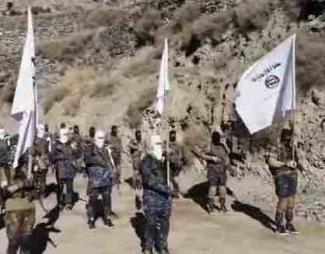
Resurgent Taliban Poses Greater Security Challenges for Pakistan
Pakistan has been struggling to cope with a multitude of predicaments ranging from political instability to sectarian intolerance, which often prompts the international community to tag this South Asian nation as a failing state.
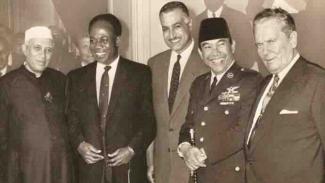
NAM Sans a Name Plate!
As leaders from about 50 countries arrive with their caravans in Tehran for what now seems to be settling into a triennial ritual, a question that has intrigued everyone for the past two decades is - what does NAM mean in a post-cold War context? Moreover, somewhat, if not equally, intriguing, a question that historians have struggled to find answers to is the origins of the term itself.
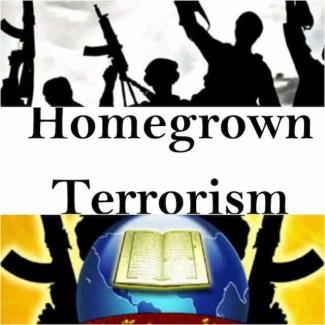
Homegrown Terrorism in India: A Persistent Threat
While India has been witnessing terrorism ever since its independence, the vicious influence and reach of contemporary terrorism are unique and cleave out potent problems for India. Many of the terrorist attacks against cities in India, like the German Bakery blast in Pune (Maharashtra) on February 13, 2010, had been conceptualized and planned by Indian Muslims who sought to attack their own country.
India’s War on Terrorism and International Cooperation
The fortitude of cooperation and practical attitude in the investigation of transnational terrorist crimes is indispensable. Indian investigating agencies have been undergoing many problems in trail of the terrorism-related cases in investigations and checks in other countries. Consequently, cooperation between law enforcing authorities of different countries is a vital tool for fighting threats to security. It requires sustained cross border cooperation, coherent regional cooperation and specific global cooperation.
Special Report: Interrogating Non-Alignment 2.0
Non-alignment is backed by a recent report prepared and published by the Centre for Policy Research, New Delhi, in February 2012. Reminiscent of a movie sequel, it is refreshed, repackaged, updated and delivered in a 2.0 form, titled “Non-Alignment 2.0: A Foreign and Strategic Policy for India in the Twenty-First Century”. And like most movie sequels today, it also runs on an altogether new script with only an imaginary connection to the first. Why stick to the name, then?

India’s Much Awaited Chemical Weapons Convention Bill
On August 30, 2012, the Lower House (Lok Sabha) of the Indian Parliament passed a bill to amend the Chemical Weapons Convention (CWC) Act (2002).
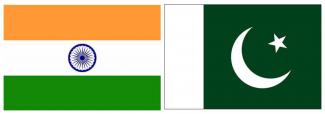
India and Pakistan’s Nuclear Doctrines: A Comparative Analysis
In 1974, India conducted a nuclear test that is termed as a ‘peaceful nuclear explosion’. However, in 1998, India conducted a full-scale nuclear test and consequently claimed to attain nuclear capability. It was soon followed by its neighbour, Pakistan, also opting for the same nuclear route. A year later, the draft on nuclear doctrine was presented in August 1999 to the Indian Prime Minister.