
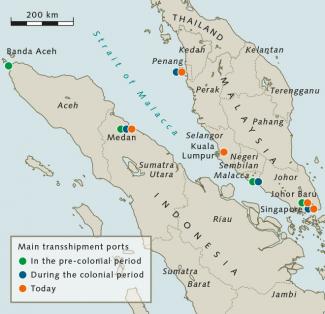
Challenging Pirates in Malacca Straits
India’s External Affairs Minister, Mr Natwar Singh, while attending the ASEAN - plus 3 meetings and the ASEAN Regional Forum (ARF) in Jakarta in July 2004, had noted that India was ready to provide security in the Malacca Straits and stressed that it was in India's national interest to ensure that the Strait remained a crime-free sea-lane.
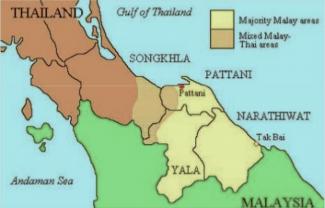
Growing Menace: Islamic Militancy in the Troubled Thailand
Thailand had witnessed its bloodiest day in recent history on April 28 this year in which more than 120 suspected militants were killed. Even after almost four and a half month have passed, the country is still reeling under Islamic militancy. Most recently, on August 26 a powerful bomb ripped through a food market in the Sukhirin district of Narathiwat province, bordering Malaysia. Coincidentally the blast occurred on the eve of a Prime Ministerial visit to the area that killed one person and injured at least 30 people.
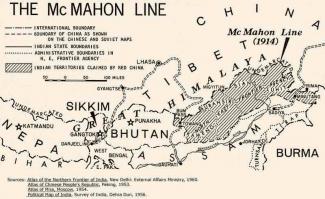
Environmental Threat beyond McMahon Line
The impending danger of bursting of an artificial lake/dam on the Pareechu River in the Tibet Autonomous Region of the People’s Republic of China has been subsided. The Indian government, policymakers and security analysts were on tenterhooks till the danger was hovering over their head. The situation was in fact no less serious than the traditional military threat emanating from across the frontiers.

Taming the Terror: Top Priority for Interim Government of Iraq
The statement released by a group called Iraq Body Count (IBC) on September 8, 2004, has claimed that the number of Iraqi civilians killed since the US attack on Iraq in March 2003 has crossed 11,000 and majority of the deaths came after the major combat operations ended on May 1, 2003. This indicates the failure of the US-led coalition to provide security to the Iraqi people.
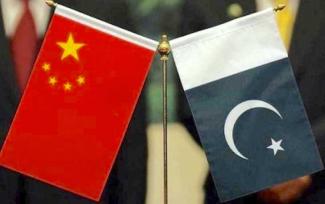
Friendship 2004: Sino-Pak Military Diplomacy Coming of Age
Military diplomacy has become an integral part of the overall national security planning in the 21st century. While there are many tenets of military diplomacy, it could be coercive diplomacy or even a simple exchange of military officers between two states for education and training. Recently, many states have pursued joint military exercises as part of the larger military goal.

Sharon Plan: A Proposal for Fractured Peace
The history and nature of peace process strengthen the contention that this is how any peace agreement would have culminated on the ground; the only difference this time is that Sharon does not have the legality of an agreement to carry out his plan.

Veiled Threat: Burqa, Madrasa and the Problem of Radicalisation in Sri Lanka
After over a month-long debate and discussion, the Sri Lankan cabinet, on April 27, 2021, imposed a ban on wearing Burqas (full-face veils in public used by Muslim women) and closing down madrasas (Islamic Seminaries) across the country. The government defended the decision by stating that these restrictions would improve national security and prevent radicalisation in society.