
TGH: At BRICS Summit, India Takes the Lead on Noncommunicable Diseases
September 24, 2026
As India attempts to redefine its role in BRICS as a health leader, an expert asks whether the country will make measurable progress instead of reaffirming known goals
When India, in its role as BRICS (Brazil, Russia, India, and China) chair in 2026, hosted the first BRICS Health Working Group meeting in New Delhi in mid-April, its proposal to center healthy lifestyles and mental health seemed like a soft addition to an eventful, yearlong diplomatic calendar. But the eighteenth BRICS Summit held September 12–13 transformed these health priorities into formally endorsed areas of cooperation.
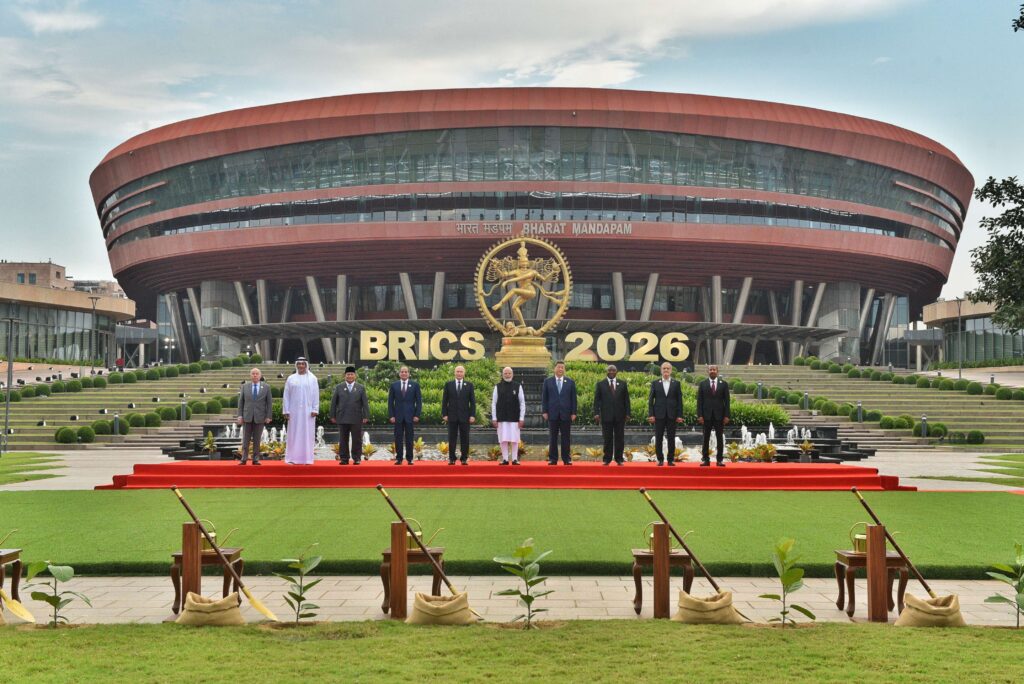
World leaders approved a BRICS Mission for Healthy Lifestyle and a roadmap for 2026–29, while supporting a network of mental-health training hubs and centers of excellence coordinated by India's top mental-health institution, the National Institute of Mental Health and Neuro Sciences (NIMHANS). These decisions undoubtedly give India's preventive health agenda greater diplomatic and institutional weight. However, their long-term relevance depends largely on how the BRICS nations turn lofty declarations into concrete improvements in primary health care.
The decisions made at September's summit follow a year of leadership on health at BRICS gatherings, including a focus on noncommunicable diseases (NCDs). While the April Working Group meeting showcased India's intent to expand the health discussion beyond only infectious diseases, pathogens, or vaccines, the July Health Ministers' Meeting reinforced the initiative by providing a detailed framework for firm health commitments. The ministerial declaration recognized NCDs, including obesity, not solely as results of individual choices but as outcomes of complex social, economic, environmental, and commercial factors. These factors create persistent pressures that increasingly shape daily life in many low- and middle-income countries (LMICs). And that is precisely why India's health leadership deserves closer attention—and, maybe, a little scrutiny.
From India to a BRICS-Wide Agenda
India's decision to put healthy lifestyles and mental health on the agenda comes at a moment when the most damaging public health pressures are least visible. Unlike infectious or communicable diseases such as tuberculosis or COVID-19, these conditions develop slowly under the pressures of city life. They are triggered by several industrial and environmental factors, such as processed food, and a sedentary work schedule, aggravated by the post-COVID work-from-home culture.
Full Text of the article: Animesh Roul, "At BRICS Summit, India Takes the Lead on Noncommunicable Diseases", Think Global Health, September 23, 2026.
Source:
Think Global Health, September 23, 2026
Tags:
BRICS, Global Health, India