
Commentaries
When War Reaches the Playing Field: How the US-Iran conflict disrupted global sporting events

September 3, 2026

September 3, 2026
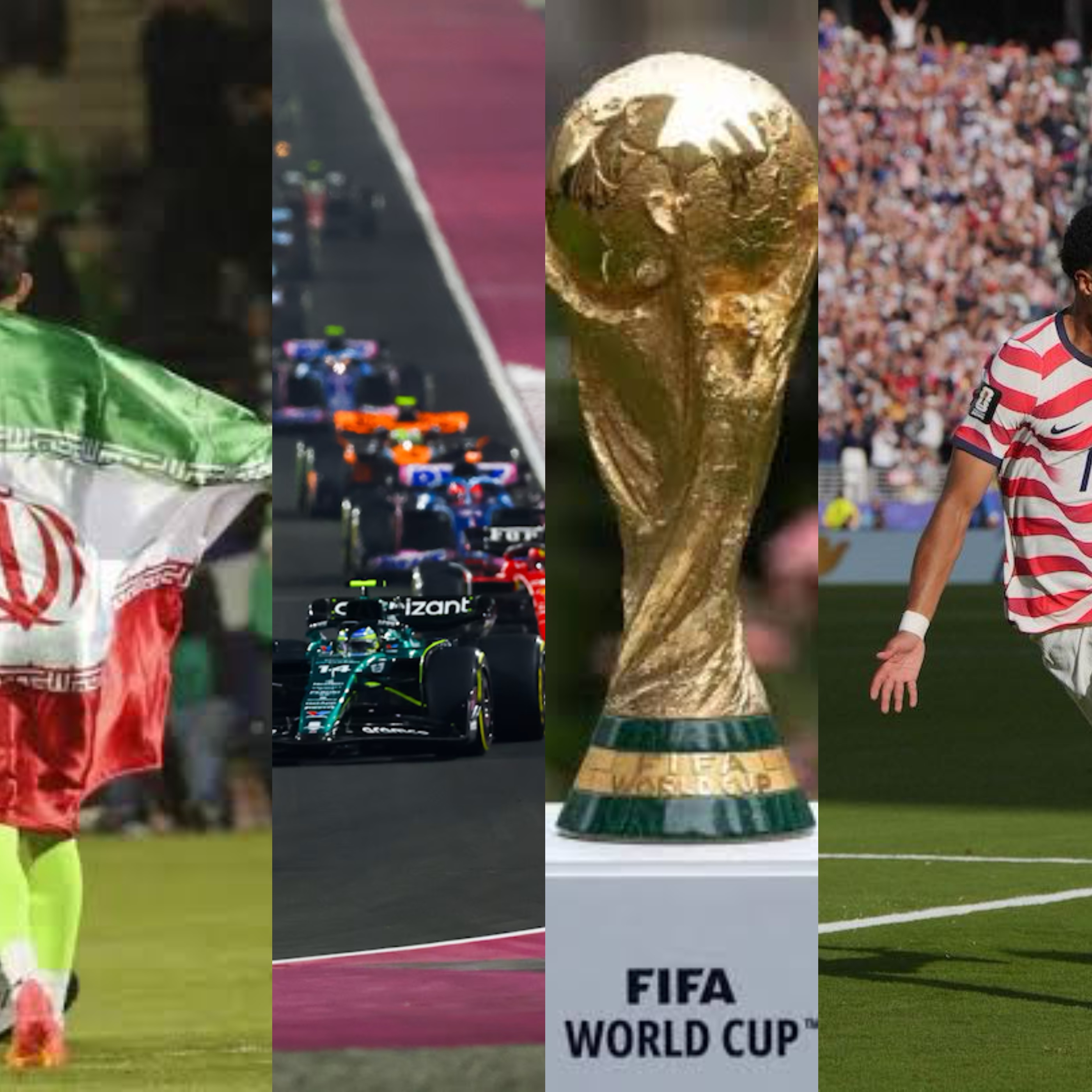
The ongoing conflict involving Iran, Israel, and the US extends beyond the battlefield, disrupting air travel, shipping, energy markets, and sports in the Middle East. Events like Formula One were canceled, MotoGP postponed, and Iranian sports faced restrictions. US forces hit Iranian launchers on Larak Island on August 30, while Iran responded with missile attacks on US bases in Jordan. Despite diplomatic talks, the renewed fighting highlights ongoing security risks that affect regional sports, transport, and airspace access.
Sport is often seen as a bridge between countries, but the 2026 experience shows it can't operate outside war. International events rely on secure cities, open airports, predictable routes, and willing governments. When these fail, sporting bodies face tough choices.
Challenges before Gulf motorsport
The clearest commercial impact was felt in Formula One. The Bahrain and Saudi Arabian Grands Prix, scheduled for April 12 and 19, were removed from the calendar due to the regional conflict. Formula One and the FIA considered alternatives but decided not to replace the races. Formula 2, Formula 3, and F1 Academy events scheduled for the same period were also affected. The decision created a five-week gap between the Japanese and Miami Grands Prix and reduced the season from 24 to 22 races.
For Formula One, cancellation means more than losing a weekend. Teams transport equipment across continents weeks ahead. Organizers sell tickets, arrange staff, secure insurance, and coordinate with aviation and security authorities. Arranging a substitute race on short notice is costly. The cancellation was crucial because Gulf states like Bahrain, Saudi Arabia, Qatar, and Abu Dhabi have invested heavily in racing to boost tourism, brands, and global attention. The war showed that such investment can't eliminate geographical risks, as missile strikes, airport closures, or airspace rule changes can quickly disrupt sporting events.
MotoGP's Qatar Grand Prix, originally set for April 10-12, was rescheduled to November 8. By September 1, Qatar was preparing to host both MotoGP and Formula One on November 8 and 29, respectively. Though officials reported the airport was functioning and life had resumed, uncertainty persisted. F1's final decision was expected by mid-September, and the World Endurance Championship had already canceled its October event in Qatar. This tests whether Gulf organizers can separate sports from regional conflict.
The destruction of a sporting landmark
The effect of the conflict was not limited to canceled competitions. Early this year, on March 5, a US-Israeli strike hit the Azadi Sports Complex in Tehran, which was developed for the 1974 Asian Games and became part of Iran's modern sporting identity. Reporting from the site showed that the complex's 12,000-seat indoor stadium, used mainly for volleyball and other indoor sports, was destroyed or heavily damaged. Iranian Sports Minister Ahmad Donyamali denied reports that the facility had a military purpose and called the strike a violation of international law and the Olympic Charter. However, the site’s military status has not been independently established in the available public reporting.
There was genuine uncertainty about Iran's participation in the 2026 FIFA World Cup in the initial days of the war. President Donald Trump said that Iran's men's team was welcome to compete in the United States but also suggested that participation might not be safe for the players. Iranian officials rejected any suggestion that the team could be excluded. The uncertainty was eventually resolved on the field.
Iran faced strict travel restrictions in the U.S. after a 2-2 draw with New Zealand in Los Angeles. Team officials said the delegation was ordered to leave the U.S. immediately and return to Mexico. Iranian American demonstrations occurred outside matches. The team competed while representing a country at war with a principal host state. FIFA's decision to keep Iran in the tournament was based on sporting rules: the team qualified and was not suspended. However, the episode revealed FIFA's limits in political neutrality. While FIFA ensures a team's right to play, states control admission, visas, security, and travel, affecting the team's experience.
Safety of Iranian women footballers?
Iran's women's team at the AFC Women's Asian Cup in Australia early this year highlighted the question of whether athletes should be seen as representatives or as individuals entitled to protection. Some Iranian players didn't sing the national anthem; Iranian state TV called them "wartime traitors," raising safety concerns. Australian authorities issued humanitarian visas, and police assisted some players while their applications were processed. This episode also exposed a gap in international sports governance. FIFA and the Asian Football Confederation can regulate matches, discipline and eligibility, but asylum and protection remain matters for national governments. When athletes fear punishment at home, sporting organizations have limited authority unless they possess clear emergency procedures and work closely with host governments and players' unions.
Conclusion
International sport cannot escape geopolitics. The conflict in Iran has not halted international sports. Formula One continued elsewhere; the World Cup proceeded with Iran; and Qatar is still gearing up for major races in late 2026. This shows that sporting organizations can adjust schedules and maintain participation even amid serious interstate conflicts. Sports can help connect people during such times, but they cannot stop a war or transcend it. Their main role is more modest: to ensure fair participation, protect athletes, and, whenever possible, maintain civilian sporting spaces. The 2026 events illustrate how challenging this becomes when the conflict extends into the very arena of competition.
Dr. Karamala Areesh Kumar, Head, Department of International Relations, Peace and Public Policy (IRP and PP), St Joseph’s University, Bengaluru (Karnataka). Joanna Dnold, Student of International Relations at St Joseph’s University, Bengaluru (Karnataka).