Biological Disasters, Climate Extremes, and India’s Air Power–Driven Humanitarian Outreach
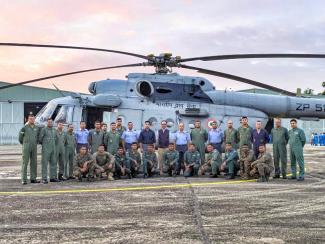
India’s recent humanitarian intervention in Sri Lanka following Cyclone Ditwah once again underlined the growing centrality of the Indian Air Force (IAF) in regional disaster response. In November 2024, the IAF deployed IL-76 and C-130J transport aircraft to evacuate 335 stranded Indian nationals from Colombo while simultaneously delivering emergency relief supplies. Under Operation Sagar Bandhu, launched on November 28, India supplied more than 58 tonnes of humanitarian material, including dry rations, tents, tarpaulins, hygiene kits, water purification systems, and 4.5 tonnes of essential medicines and surgical equipment. The operation demonstrated India’s ability to integrate evacuation, relief delivery, and regional diplomacy into a single, coordinated air effort.
This article offers a broad overview of disaster relief operations with a specific focus on biological disasters and climate-induced emergencies, two categories that pose distinct operational, logistical, and governance challenges for Humanitarian Assistance and Disaster Relief (HADR) frameworks. In the Indian context, the IAF occupies a central position as the primary first responder in such crises. The article also examines key domestic and international HADR missions undertaken by the IAF, highlighting how air power has become an indispensable pillar of India’s disaster response and humanitarian diplomacy.
HADR Challenges: Biological and Climate Extremes
The emergence of modern Humanitarian Assistance and Disaster Relief can be traced back to the aftermath of the Battle of Solferino in 1859, when Henri Dunant’s efforts led to the creation of the International Committee of the Red Cross in 1863 and the first Geneva Convention in 1864. After the Second World War, the global humanitarian structure expanded with the formation of the United Nations, followed by agencies such as UNICEF and UNHCR. Since the end of the Cold War, however, the nature of HADR has changed fundamentally. Today’s operations unfold in environments shaped by fragile states, prolonged conflicts, climate change, health emergencies, and economic shocks. Ongoing crises in Gaza, Ukraine, Sudan, and Yemen demonstrate how humanitarian action is increasingly forced to operate under sustained conflict conditions rather than short-term emergencies.
Among all disaster categories, biological disasters pose the most complex challenge for HADR systems. Unlike cyclones or earthquakes, pandemics are invisible, evolve unpredictably, and often lack clear attribution in their early stages. Outbreaks such as Ebola, Zika, dengue, and chikungunya were eventually contained at regional levels, but COVID-19 exposed the deep structural weaknesses of global health preparedness. By 2023, the pandemic had officially claimed over seven million lives worldwide and disrupted every major economic and governance system. The prolonged nature of biological disasters leads to sustained pressure on medical infrastructure, logistics chains, governance capacity, and public trust.
Effective HADR operations during biological emergencies demand specialized medical response systems that extend well beyond standard disaster relief efforts. These include swift disease surveillance, contact tracing, increased hospital capacity, isolation facilities, vaccination logistics, oxygen supplies, ventilator deployment, and continuous access to essential medicines. Trained medical personnel, public health experts, and emergency logisticians are as vital as transport aircraft and helicopters. Simultaneously, psychological support, community awareness, and local capacity-building are crucial for preventing panic and secondary humanitarian crises.
Biological disasters cause significant structural challenges. Extended lockdowns and movement restrictions face political opposition, economic upheaval, and public fatigue. Healthcare worker and medical supply shortages become ongoing issues. Misinformation and digital panic spread quicker than the disease itself, undermining public trust and government credibility. In many developing areas, limited access to real-time data and weak digital infrastructure further hinder coordination and situational awareness.
Similarly, Climate-driven disasters compound these vulnerabilities. Floods, cyclones, cloudbursts, extreme heat, droughts, and cold waves directly disrupt transportation, telecommunications, power supply, and hospital infrastructure. The July 26, 2005 Mumbai cloudburst remains a defining example, when 944 mm of rainfall in 24 hours paralysed the city and claimed over 1,000 lives. For air relief operations, adverse weather severely limits sortie generation, helicopter rescues, and airdrop accuracy. At the same time, the physical risk to relief crews rises sharply as runways, helipads, bridges, and communication networks fail.
Technology has become the most vital force multiplier in modern HADR operations. Satellite imagery allows near-real-time damage assessment and target prioritization. Drones are increasingly used for reconnaissance, last-mile delivery, and survivor detection. Artificial intelligence and machine learning models enhance weather prediction, flood modeling, and disaster forecasting. GIS platforms help visualize affected areas and optimize relief routes, while robotic systems are now deployed for search operations in collapsed structures. Together, these technologies greatly improve response speed, accuracy, and responder safety.
IAF’s Notable HADR Missions
Within this evolving landscape, the Indian Air Force has become the backbone of India’s HADR framework. Its main tasks include search and rescue, strategic and tactical airlift, supply airdrops, airborne medical evacuations, aerial reconnaissance, and the restoration of vital air infrastructure. The rebuilding of Car Nicobar airfield after the 2004 tsunami was one of the clearest examples of the IAF’s ability to reopen isolated areas for ongoing relief efforts.
The IAF’s domestic disaster response record is extensive. During Operation Rahat in the 2013 Uttarakhand floods, the force carried out the world’s largest heliborne civilian rescue mission, evacuating nearly 20,000 people and airlifting over 380 tons of relief materials. During the 2018 Kerala floods, continuous helicopter operations rescued thousands while keeping cut-off districts supplied. The IAF played a key role after the 2011 Sikkim earthquake and during the Indian Ocean tsunami in 2004 through Operation Sea Waves. More recently, Operation Rahat in 2025 involved the IAF conducting flood relief operations alongside the Indian Army across Punjab, Himachal Pradesh, and Jammu and Kashmir.
Internationally, the IAF has become a key instrument of India’s disaster diplomacy. Under Operation Maitri, following Nepal’s 2015 earthquake, the force flew over 1,500 sorties, evacuated thousands of civilians, and delivered more than 700 tonnes of relief material. During Operation Raahat in Yemen the same year, over 5,600 people, including 960 foreign nationals, were evacuated from an active war zone. Operation Brahma in Myanmar in 2025 saw the rapid airlift of critical supplies after a major earthquake. During the COVID-19 pandemic, IAF aircraft transported oxygen equipment, ventilators, medicines, and vaccines to several countries, significantly enhancing India’s global humanitarian profile. The force has also conducted large-scale non-combatant evacuation operations, such as Operation Devi Shakti in Afghanistan and Operation Ganga in Ukraine.
Operational success in these missions relies on close coordination with the National Disaster Response Force, State Disaster Response Forces, and civil agencies. The IAF’s diverse fleet offers flexibility across different terrains and mission types, including heavy-lift C-17 Globemasters, C-130J Hercules, and IL-76 aircraft, as well as medium-sized An-32s, Dornier Do-228s, and rotary-wing platforms such as Chinook, Mi-17, Mi-26, and Advanced Light Helicopters.
Road Ahead
India’s HADR capability is steadily developing into a key part of its national security and foreign policy toolkit. Climate change is increasing both the frequency and severity of disasters, while biological risks remain constant threats in an interconnected world. This will place ongoing demand on India’s airlift capacity, medical response systems, and inter-agency coordination frameworks. Strategic priorities should now include higher budget allocations for disaster preparedness, the creation of rapid bio-HADR response units, pre-positioned logistics hubs in the Indo-Pacific, and stronger Quad-level humanitarian coordination. The Indian Air Force will continue to be the main enabler of this growing humanitarian effort.