

COP30 in Belém: Fragmented Multilateralism, Erosion of Climate Mitigation and Inclusion of Trade
Has the 30th edition of the UN-sponsored climate summit, COP30, been delivered as initially expected? Indeed, trust in the Paris Agreement has been maintained and partly fulfilled. Confidence in multilateralism remains strong despite the absence of the second-largest emitter of Greenhouse Gases (GHG), the US. However, the divisions among coalition member groups within COP remain as sharp as they have been in 30 years of climate negotiations.

South Asia’s Quiet Refugee Crisis: Caught Amid Law, Identity, and Climate
I grew up in Guwahati (Assam), where questions of identity were never theoretical. They surfaced in school registers, land records, police verifications, and anxious family conversations. Some people carried documents with them like talismans. Others lived in fear that a single missing paper could erase their place in the only country they had ever known. Long before I understood the politics of migration, I witnessed its emotional cost.
Between Isolation and Recognition: Israel, Palestine and the New Global Consensus
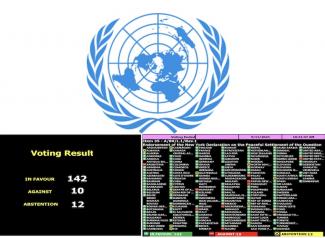
On September 12, 2025, 142 nations voted in favor of a two-state solution, 10 against, and 12 abstained — within 24 hours of the Israeli prime minister declaring that Palestine would never be a state. Major countries, including Saudi Arabia, France, and India, have endorsed the resolution, acknowledging Palestinian suffering. This raises a critical question: Will the adoption of the two-state resolution change the Israel–Palestine conflict, or will the cycle of violence continue?
Algorithmic Warfare: India’s Leap Into AI-Driven Defence Modernity
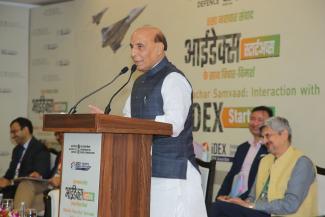
Recently, during the conference titled “Raksha Navachar Samvaad: Interaction with iDEX Startups,” held ahead of the National Conference on Defence Innovation at Vigyan Bhawan in New Delhi on October 7, Defence Minister Rajnath Singh stated that the nature of warfare is rapidly evolving.
SCO and BRICS in a Fractured World: India’s Balancing Act in Multipolarity
Against the backdrop of ineffectiveness of the UN in diffusing West Asia and Eurasia conflicts, failure to adopt a global pact on plastic pollution, and over and above all, the rise of unilateral trade protectionism, the China-led Shanghai Cooperation Organisation (SCO) has concluded its two-day (August 31 - September 1) high-profile 25th Summit in Tianjin, China.

Musk, Trump and the Future of Free Speech on Social Media
The debate over free expression on social media today straddles politics, technology, and civil liberties. When Elon Musk completed his $44 billion acquisition of Twitter on October 27–28, 2022, he declared his ambition to transform the platform into a global forum for candid discussion. One of his earliest and most controversial actions was restoring the account of former U.S.

Neglected Hazard, Growing Threat: Why Coastal Erosion Demands an Early Warning System
In 2022, United Nations Secretary-General António Guterres launched the ‘Early Warning for All’ (EW4ALL) initiative, aiming to provide universal protection against hydro-meteorological, climatological, and related environmental hazards by 2027 (WMO, 2022).
Missiles, Misinformation, and Minds: Why India Must Build Information Warfare Infrastructure
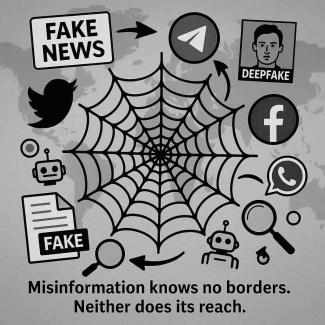
The May 2025 India-Pakistan conflict offered a sobering demonstration of how modern wars are no longer confined to physical battlefields alone. Alongside precision strikes and conventional military operations, both countries engaged in a fierce struggle for control over public perception, media narratives, and psychological advantage.
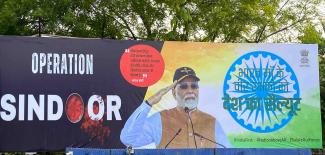
A month after Pahalgam: How every Indian can expose Pakistan’s terror playbook
It has been one month since the brutal Islamist terror attack in Pahalgam, Jammu and Kashmir (April 22, 2025), where civilians were deliberately targeted and killed after being asked their religion — a cold-blooded and calculated act of violence. The incident stands as yet another grim reminder of the enduring and well-orchestrated threat posed by Pakistan-based Islamist terror networks.