
Commentaries
India–US Trade Negotiations: Where Commerce Meets Strategic Autonomy

October 19, 2026
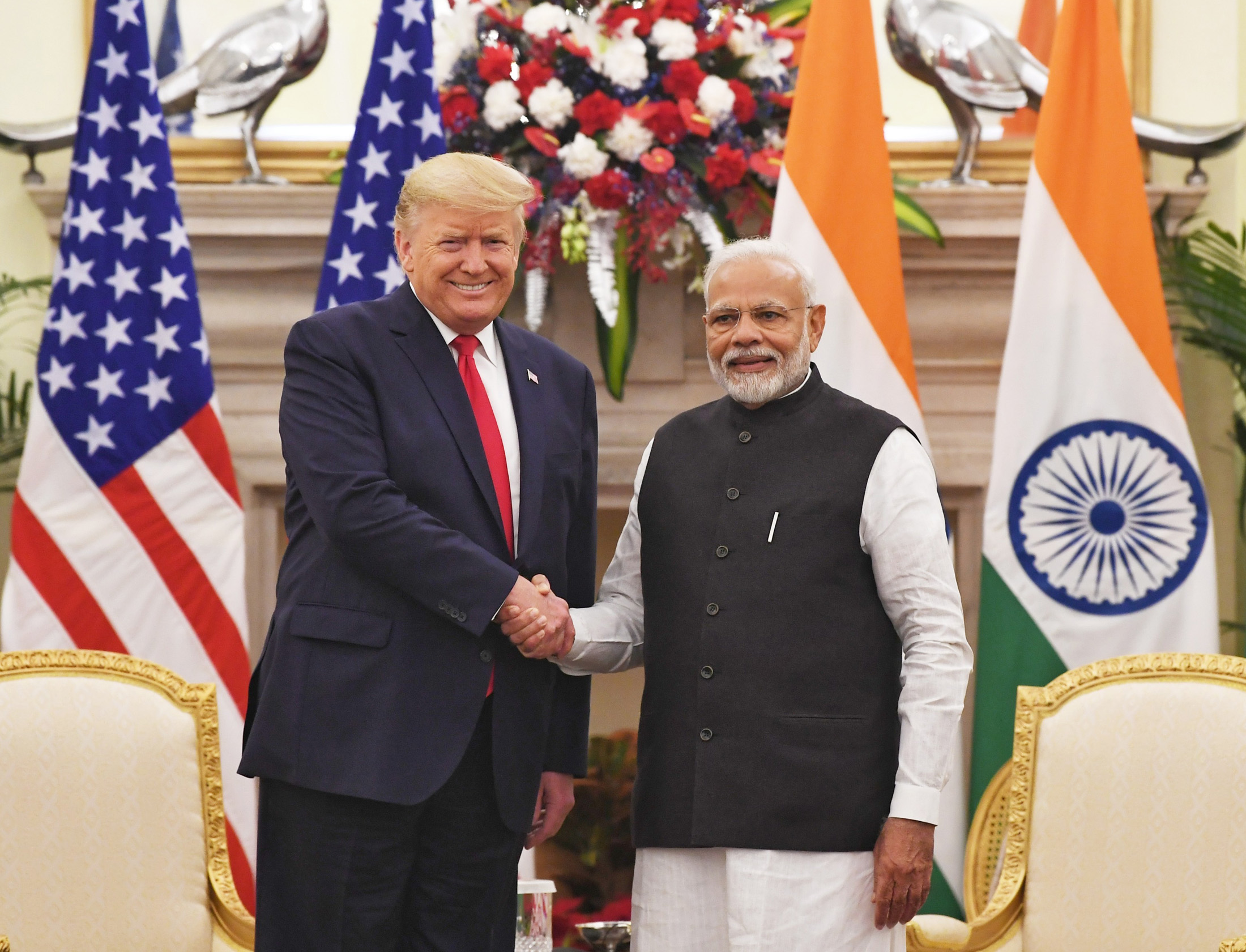
The social-media narrative of the India–US trade dispute is dramatic: Prime Minister Narendra Modi has supposedly called Washington's bluff and refused to compromise. The reality is less theatrical but more consequential. India has not walked away from negotiations. Both governments remain engaged, though the terms of a possible agreement have become politically and strategically complex.
On October 5, Finance Minister Nirmala Sitharaman said negotiations had reached a plateau, and further concessions would be difficult. US Trade Representative Jamieson Greer had earlier acknowledged that a deal was not imminent. Yet, on October 13, External Affairs Minister S. Jaishankar suggested that negotiations were approaching a landing point. Commerce Minister Piyush Goyal later said the first phase was nearing completion. US Secretary of State Marco Rubio's October visit offers another opportunity to advance bilateral discussions.
The India–US trade dispute is no longer just about tariffs. It is increasingly about whether access to America's market entails expectations of alignment with America's foreign policy.
This is not a diplomatic breakdown. Two governments are bargaining over something bigger than tariffs, almonds, and motorcycles. The question is when a trade agreement stops being primarily about commerce and begins testing the limits of a country's foreign-policy independence.
How a Tariff Fight Became a Loyalty Test
The current dispute stems from Washington's August 2025 decision to impose an additional 25% tariff on Indian goods in response to purchases of Russian oil, raising the overall tariff burden on many products to 50%.
In February 2026, the two countries announced a framework for an interim trade agreement. Washington reduced its reciprocal tariff rate to 18% and removed the additional 25% penalty. President Donald Trump said India had committed to stopping Russian oil purchases, although New Delhi did not publicly endorse that commitment in equally categorical terms.
The framework went considerably beyond tariffs. India expressed its intention to purchase more than $500 billion worth of American energy, technology, coal and other products over five years. Both countries also agreed to strengthen what the framework described as "economic security alignment", covering supply chains, investment reviews, export controls and policies concerning third countries.
Such provisions are not unusual in contemporary trade negotiations. Yet they carry significant implications for a country that maintains important economic and strategic relationships with competing powers, particularly Russia and China.
The conflict involving Iran and the disruption of energy supplies through the Strait of Hormuz subsequently complicated India's calculations. With Gulf supplies under pressure, Russian crude remained an important alternative. Washington's September legislation, threatening punitive tariffs of up to 100% on major purchasers of Russian energy, added another layer of uncertainty.
The economic stakes are substantial. India's merchandise exports to the United States reached $42.79 billion between April and August 2026, up from about $40.39 billion in the same period a year earlier. India recorded a bilateral goods trade surplus of around $34 billion in 2025–26.
For New Delhi, the immediate priorities are predictable: stable tariffs, continued market access and protection for sensitive agricultural and dairy sectors. Washington wants greater access to India's market and closer cooperation on economic security. The difficulty arises when commercial concessions become linked to decisions about India's energy supplies and external partnerships.
That is where trade negotiations begin to resemble a geopolitical loyalty test.
When Trade Deals Start Behaving Like Alliances
Trade agreements to advance strategic objectives did not begin with Trump's second presidency. The 2018 United States–Mexico–Canada Agreement required members to notify their partners before negotiating free-trade agreements with a non-market economy. Many interpreted the provision as a way to discourage closer economic integration with China.
Supply-chain resilience, investment screening and restrictions on sensitive technologies can serve legitimate national-security purposes. But when such measures become conditions for market access, trade negotiators increasingly enter territory traditionally reserved for foreign ministers.
For America's treaty allies, economic and security commitments already operate within established alliance structures. India occupies a different position.
Indian foreign policy rests on strategic autonomy and multi-alignment. New Delhi cooperates with Washington through the Quad and numerous defense and technology partnerships while participating in BRICS and the Shanghai Cooperation Organization alongside Russia and China. It continues to maintain significant defense and energy relationships with Moscow.
These relationships do not always sit comfortably together. Their value lies precisely in allowing India to pursue different interests without accepting the authority of any single geopolitical bloc.
As Jaishankar has repeatedly emphasized, India and the United States have a strategic partnership, not a formal alliance. Economic-security cooperation does not automatically transform that relationship into an alliance. Nevertheless, commitments that effectively restrict India's dealings with third countries could gradually narrow its freedom of action.
India has spent decades preserving that independence. A trade agreement should not quietly diminish it. The broader question is whether economic interdependence can deepen without requiring strategic subordination.
The Russian Diesel Double Standard
Washington's recent handling of Russian energy highlights some tensions in its approach. On October 9, as American diesel prices climbed and the midterm elections drew closer, Trump announced an understanding with Russian President Vladimir Putin to facilitate additional Russian diesel supplies to American and international markets. Washington later eased certain restrictions on Russian fuel transactions through April 2027.
This came after weeks of American pressure on India over its purchases of Russian crude. Ukraine criticized the arrangement, arguing that easing restrictions would benefit Moscow even as its military operations continue.
The circumstances are not exactly the same. India's crude imports and Washington's temporary sanctions exemptions for diesel involve different commercial arrangements. Still, the underlying issue is hard to overlook.
Russian energy revenues help sustain Moscow's war effort, yet Washington has shown that domestic energy needs can justify exceptions to its own restrictive policies. India, facing similar energy-security pressures, has faced threats of punitive trade measures.
This does not mean India's Russian purchases are beyond criticism, nor does it erase the wider consequences of maintaining energy trade with Moscow during the war in Ukraine. But the American decision highlights a familiar reality: governments often seek flexibility when national security and domestic economic interests are at stake. India can reasonably expect its own energy-security needs to receive comparable consideration.
India's Bargaining Power and Its Limits
India is not without negotiating options. In January 2026, it concluded negotiations on a free-trade agreement with the European Union, although the agreement still requires formal approval before entering into force. The U.S. signed an agreement with Britain in 2025. Neither market can immediately replace the United States, but economic diversification reduces dependence on any single partner. Washington also has compelling reasons to maintain strong relations with New Delhi. India remains important to America's Indo-Pacific strategy and efforts to manage China's growing influence. Defense cooperation, technological partnerships, and the Quad provide a substantial foundation that neither country should jeopardize over trade disagreements.
Nevertheless, India cannot afford to underestimate its vulnerabilities. Exporters face uncertainty when American buyers reconsider orders or diversify suppliers. Indian industry requires advanced technology, capital, and access to international markets. Prolonged tariff disputes would cost businesses and workers alike.
Strategic autonomy does not mean freedom from economic dependence. It means managing multiple relationships so that dependence on one partner does not dictate national policy. This is also why New Delhi should use the language of sovereignty carefully.
Not every American demand infringes on India's independence. Disputes over foreign investment regulations, taxation, market access and non-tariff barriers are legitimate subjects of commercial negotiation. Some regulatory reforms could strengthen India's competitiveness and attract investment. Agricultural and dairy protections involve domestic livelihoods and deserve serious consideration on their economic and social merits. They need not be defended through exaggerated claims about national sovereignty. This distinction is important here. Genuine strategic red lines can lose credibility when every commercial concession is seen as a national betrayal.
The likely outcome remains a narrower interim agreement on tariffs, purchases, and market access, leaving the most contentious economic-security questions for further negotiation. Both governments have reasons to avoid turning a trade disagreement into a strategic confrontation. Washington must decide whether it wants India as a partner with independent interests or expects it to follow American geopolitical priorities. Moscow should not interpret India's energy purchases as unconditional political loyalty. Beijing, meanwhile, would have little reason to regret a prolonged India–US dispute.
The implications extend beyond India. Other emerging economies, including Brazil and Indonesia, also seek access to American markets while maintaining independent relationships with competing powers. India's negotiations could therefore help establish how far economic-security conditions may extend into future trade agreements. New Delhi's position should be clear: negotiate firmly on tariffs; purchase American energy, aircraft, and technology when commercially justified; and reform regulations that genuinely need it. Cooperate on economic security where interests align, while resisting commitments that unnecessarily limit independent foreign-policy choices.
India can deepen economic cooperation with Washington, including in sensitive strategic sectors, without automatically aligning with every American foreign-policy objective.
Mansi Mehrotra (PhD) is a strategic affairs analyst based in New Delhi. Her research and writing cover international relations, geopolitics, strategic affairs, and global economic and financial developments. Views are personal.