

Transnational Islam in India: Movements, Networks, and Conflict Dynamics
Since the events of 9/11, transnational Islamic forces have consolidated more along religious lines with regional and local Islamic outfits to further the extremist cause worldwide. South Asia has been confronting the challenge of Islamic extremism for many years and in varied forms. Among the South Asian countries worst hit by Islamic extremism, India, with a Muslim minority population numbering over 140 million, has cradled a number of important transnational Islamic movements throughout history.

Mumbai Outraged Once Again: India Blinks, Blames Homegrown Terror
Executive Summary: In the weeks following the July 13 bomb explosions in Mumbai, responsibility for the attacks has yet to be determined. Investigative agencies have not yet pinpointed a suspect nor has any terrorist group claimed the blasts as its own doing, perhaps in order to complicate the investigation or delay the process. The triple blasts, which killed 24 people and injured over one hundred, mark the first major terrorist attack in Mumbai since the November 2008 attacks orchestrated by Pakistan’s Lashkar-e-Taiba (LeT).

Country Report: Maldives
Although the population of the Maldives is one hundred per cent Muslim, mostly Sunni, and the government prohibits the practice of other religions, Maldivian society was largely moderate and tolerant until comparatively recently.1 Today, however, Islamic clerics and lay preachers disseminate a radical strain of Islam across the country, mostly in impoverished and secluded locales such as Ukulhas (in North Ari atoll).

Pakistan’s Jamaat-ud-Dawa Steps Up Campaign of Anti-American Rhetoric
Despite the Pakistan government’s proscription, the Islamic charity Jamaat-ud-Dawa (JuD) has stepped up its overt anti-Indian and anti-Western rhetoric, holding mass protest rallies across Pakistan as its leaders continue to give provocative speeches in various public forums to fuel Jihadi sentiments and threaten Indian and Western interests in the region. The JuD is believed to act as a front organization for the Lashkar-e-Taiba terrorist group, responsible for the 2008 assault on Mumbai.

India Pressures Pakistan on Other Terrorist Fugitives after Bin Laden’s Death
The secret U.S. operation in Pakistan’s garrison city of Abbottabad in early May has exposed Pakistan’s terror underbelly. The operation that resulted in the death of Osama bin Laden triggered severe international criticism against Pakistan for allegedly sheltering the al-Qaeda chief for almost six years.
State Actors and Germ Warfare: Historical Perspective
Two thousand years ago the Greeks and Romans used human and animal corpses with great effect to poison wells of drinking water. The practice of throwing the bodies of plague victims over the walls of cities was also prevalent in the past. This strategy was employed by the Tartars against the Genoese in the Crimea War in 1346. It forced the Genoese to flee immediately and the spread of the disease to Italy became inevitable.

India: BioWeapons Monitor (BWPP)
The BioWeapons Monitor is an initiative of the BioWeapons Prevention Project (BWPP) to help monitor compliance with the international norm established primarily in the 1972 Biological Weapons Convention (BWC). In particular, it aims to increase transparency of activities relevant to the BWC, which the current treaty regime does not do sufficiently.

India: Kashmir: On the Way Back?
By Athar Parvaiz and Animesh Roul / In Asia Pacific, Society & Education / October 5, 2010
Pakistani Taliban Continue to Target Sufi Sacred Spaces
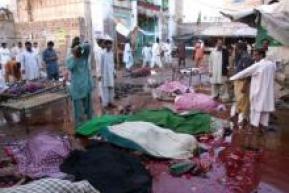
In troubled Pakistan, sacred spaces such as Sufi shrines have increasingly been the target of bloody attacks by Taliban and al-Qaeda militants. The Taliban-Deobandi school of Islam perceives Sufi practices such as devotional whirling dances, the veneration of Sufi saints and other rituals as being un-Islamic and against the tenets of the religion.